


Brand identity for premium startups has one job: to make a young company look as credible and considered as the product it sells. Buyers and investors judge quickly, and an identity that feels improvised suggests the business might be too.
Premium branding is not elegant typography or neutral colours. It is perceived value, built from clear differentiation, consistent communication and a customer experience that keeps the brand's promises. It also has to evolve, because the startup that launches is rarely the company it becomes two years later.
In short: A premium startup brand identity combines clear market positioning, distinctive visual design, consistent messaging and a high-quality customer experience. It should communicate the startup's value, differentiate it from competitors and remain adaptable as the business grows. For sustainable technology startups, credible environmental claims and clear communication of technical innovation are particularly important.
What makes a startup brand feel premium?
Premium perception comes from five elements working together:
- Clear positioning: a compelling reason for a specific customer to choose you over the alternatives.
- Distinctive visual identity: recognisable design choices rather than the generic startup aesthetic.
- Consistent communication: messaging and tone of voice aligned with the positioning in every channel.
- High-quality execution: attention to detail across digital and physical applications, from the pitch deck to the packaging.
- Coherent customer experience: a product or service that delivers what the brand promises. Branding cannot compensate for a weak offering.
Premium does not necessarily mean luxury. A premium technology startup earns its position through clarity, reliability and precision; a luxury hospitality brand through atmosphere, craft and exclusivity. Their identities should look nothing alike.
Casa Roca, a boutique apart-hotel in Palma de Mallorca, is not a startup, but it shows the principle: to stand out in Palma's premium hotel market without conventional luxury codes, its logo, palette and graphic language were drawn from the building's own heritage and architecture. The Casa Roca case study follows that positioning from the website to menus and staff uniforms.
How to create a premium brand identity for a startup
This framework is tailored to founders. For the general process, see our guide to building a strong brand identity.
1. Define your positioning and target audience
Before any design work, answer four questions in writing: who you serve, what problem you solve, what makes your offering distinctive and why customers should perceive it as premium. If the last answer is "because it will look expensive", the positioning is not finished. Our article on brand strategy vs brand identity explains why this layer comes first.
2. Establish the brand personality
Choose three or four characteristics the brand should communicate, and rank them, because they will sometimes conflict. A premium fintech startup may prioritise clarity and trust, while a design-led consumer brand may emphasise creativity and exclusivity.
3. Develop a distinctive visual identity
The visual identity translates the positioning into:
- a logo and its variations
- typography
- a colour palette
- graphic elements
- imagery
- motion and interaction principles, where the product is digital
Each element should reinforce the positioning. A typeface chosen because it is fashionable dates with the trend.
4. Create a consistent verbal identity
Define your tone of voice, key messages, value proposition and brand vocabulary, including the words you avoid. This lets the next hire write in the same voice as the founders.
5. Build a flexible identity system
Turn the assets into reusable components with clear rules: logo versions for each format, type scales, colour values, layout grids and templates. For Cosynex, a Swiss recruitment agency, we extended the Cosynex brand identity to CV templates and presentations, so the team applies it to everyday documents.

6. Apply the identity across customer touchpoints
List the touchpoints that matter in the next year or two: website, application, investor and sales presentations, social media, packaging and marketing materials. Our startup branding and identity design work covers this full range, and when a site is part of the launch, we plan website development alongside the identity rather than after it.
What should a startup brand identity system include?

A collection of assets is a logo, a few colours and a font file. A system adds the rules that connect them, so anyone can produce new material consistently. A professional system may include:
- primary and secondary logos
- a typography hierarchy
- colour specifications
- graphic elements
- photography and illustration direction
- iconography
- layout principles
- social media templates
- presentation templates
- brand guidelines
- digital design components, where required
Reusable elements matter most as teams, products and channels expand, because each creates pressure to improvise. For HUBLIBOX, a Swiss storage and real estate company, we built the logo and wider identity on a single line that had to stay clear across many formats, and applied it to both its Real Estate and Self Storage divisions. The HUBLIBOX project also covers the landing page for its self-storage pre-opening campaign.
How do you build a brand identity for a sustainable tech startup?
A brand identity system for a sustainable tech startup faces a particular problem: climate tech, clean energy and sustainability-focused startups make similar promises, and audiences have learned to be sceptical of them.
Communicate credibility through evidence
Sustainability claims should be specific, accurate and supported by evidence: what is measured, against which baseline, and who verified it. Vague environmental promises and unsupported claims about impact weaken trust, and regulators in several markets now scrutinise them.
Balance innovation with accessibility
The identity should make complex technology understandable to customers, investors and partners without reducing it to slogans. Clear diagrams and a precise vocabulary help people grasp what the company does in one reading.
Avoid generic sustainability aesthetics
Green palettes, leaf symbols and nature imagery say you work in sustainability, not why you are different. Build the visual language from the company's actual technology, audience and positioning: an energy-storage company and a carbon-accounting platform share a sector, not a customer.
Design for multiple audiences
Each audience looks for something different:
- Investors: evidence of market, team and scalability.
- Business customers: reliability, technical proof and return on investment.
- End users: simplicity and trust.
- Industry partners: compatibility and professionalism.
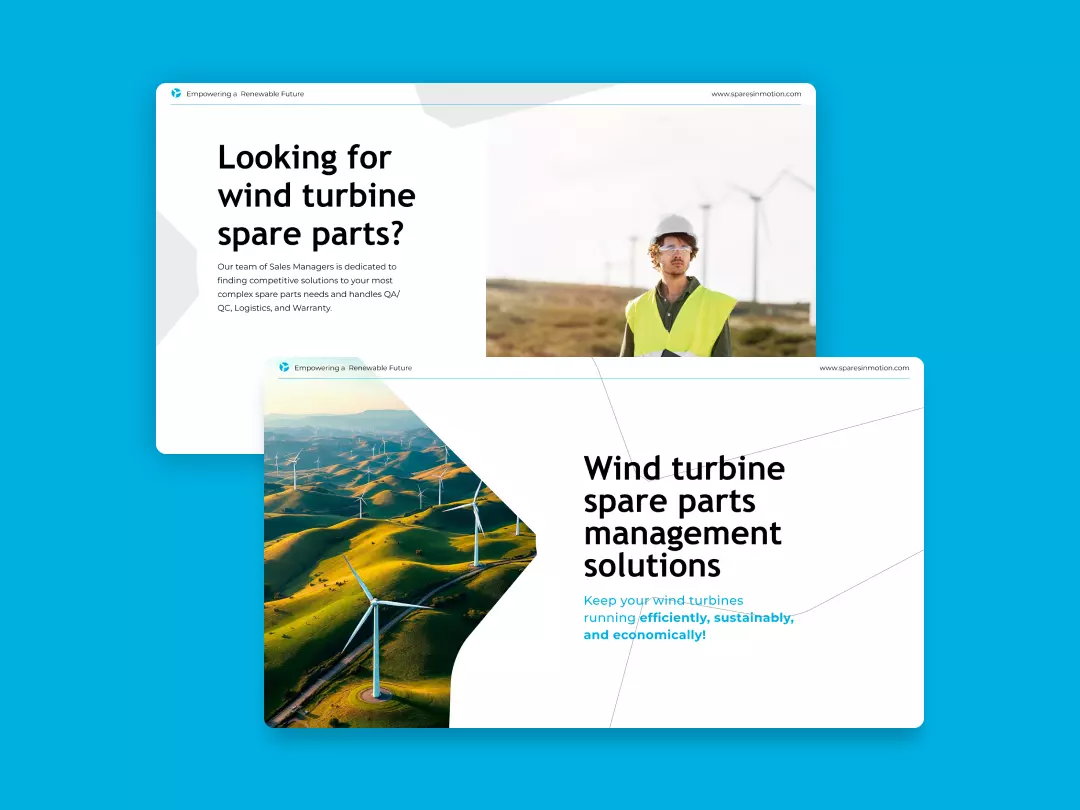
Spares in Motion is not a startup, but its brand faced the same challenge in the renewable energy sector. For this global wind energy spare-parts supplier, we built a messaging framework for technical, operational and strategic audiences, documented in a brand book with the Spares in Motion visual identity.
Create a scalable identity system
The identity has to work in product interfaces, websites, investor presentations, technical documentation and marketing materials. Test typography and colour on data-heavy layouts early, because that is where weak identities break first.
What branding mistakes should premium startups avoid?
- Copying established premium or luxury brands. Borrowed codes look like imitation.
- Prioritising aesthetics before positioning. Without a strategy, design decisions become matters of taste.
- Using generic visual trends without differentiation. Trends look current for a year, then interchangeable.
- Creating an identity that cannot scale across applications. A logo that fails as an app icon forces an early redesign.
- Neglecting consistency between brand communication and product experience. A product that breaks the promise costs credibility.
None of this means every startup needs an extensive branding project before launch. A focused identity applied consistently is better than a large system no one uses.
How much does professional startup branding cost?
Budgets depend on:
- brand strategy requirements
- visual identity complexity
- the number of deliverables
- brand guidelines
- website or product design
- implementation requirements
A basic logo package and a complete brand identity system are different purchases; our guide to professional logo design costs explains what a logo alone includes. Startups can prioritise essential deliverables first and expand the system as the business grows. If you are also funding a first product, our breakdown of MVP development costs helps you plan both budgets. At Morpheon, brand and digital ecosystem projects typically start from €20,000.
How do you choose a brand identity design agency for your startup?
Lists of top brand identity design agencies for startups rarely explain their criteria. Evaluate agencies on:
- a relevant branding portfolio
- experience with startups or emerging brands
- strategic understanding
- creative quality and originality
- the ability to develop scalable identity systems
- experience with digital products
- deliverables and ownership terms
- transparent project scope and pricing
Review complete branding case studies rather than isolated logos: a case study shows how an identity behaves in real applications. For startups building digital products, an agency that combines branding, UX/UI design and development avoids handing the identity from one team to the next. For Sherpa, a newly founded French consulting firm, we created the brand identity, website and marketing materials from scratch within one project.
Frequently asked questions
What makes a startup brand identity look premium?
Clear positioning comes first: a specific reason for a specific customer to choose you. A distinctive visual identity, consistent communication and high-quality execution across every touchpoint then make that position visible. Elegant typography alone does not create premium perception; the product also has to match the promise.
Does a startup need a complete brand identity before launching?
Not always. It depends on the business model, the audience and the launch objectives. A startup raising investment or selling to demanding buyers usually needs a solid core identity from day one. Others can launch with the essentials and expand the system as they grow.
What's the difference between a startup logo and a brand identity system?
A logo is a standalone visual mark that identifies the business. A brand identity system is a coordinated set of elements around it, such as typography, colour, imagery, templates and guidelines, with rules for how they work together. The system keeps a growing team's output consistent.
How much does startup brand identity design cost?
The cost depends on the strategy work required, the complexity of the visual identity, the number of deliverables, guidelines and whether website or product design is included. A logo package costs far less than a complete identity system. At Morpheon, brand and digital ecosystem projects typically start from €20,000.
How can a sustainable tech startup build a distinctive brand?
Start with specific, evidence-based sustainability claims and a clear explanation of what the technology does. Build a positioning that differentiates you within the sector, then a visual language drawn from your technology and audience rather than green palettes and leaf symbols. Make sure it works for investors, customers and partners.
Building a premium brand for your startup?
At Morpheon, we combine brand strategy, creative direction and visual identity design to help ambitious businesses develop distinctive brands that work across digital and physical experiences.
